The singer was truly mesmerising. For two hours he unfolded raga after raga, composition after composition and more than a dozen shades of melody. Yet someone in the audience remarked, “Yes, he is a great singer. But all the songs sound the same.”. For such a listener, everything appeared similar. His comment revealed his lack of musical understanding. If a concert hall were filled with many such people, what would be the plight of the singer? He would stand helpless, unheard in essence. When it comes to Upanishad jnanam, the situation is even more subtle. The preparedness to receive it is rare. Without that readiness, confusion arises, interpretations go astray, and sometimes the mind slips into nihilism. For those who are ready, another challenge remains. It is about the dissolution of individuality, the surrender of the ‘I’.
When one speaks of dissolution, one must look to Shiva. He is the destroyer not because he ends the universe, but because he dissolves the individual. He is fire. And fire leaves nothing behind. Can you point to that “nothing” left after the burning? The mind cannot grasp nothing. Therefore, a form of the formless is shaped as the Linga for the mind to grasp, which is a symbol of that very nothingness, which is the infinite. You may understand the infinite, yet can you show it? It cannot be displayed, only recognised. This is why receiving Upanishad jnanam is so subtle, so demanding of inner preparedness.
A Shiva temple is a smashana, a place where fire burns without pause. Its purpose is dissolution. At the heart of this smashana is the garbhagṛha, the womb chamber where Shiva abides as Kaalagni, the fire of time. Kashi is a big smashana. Bodies burn ceaselessly. And at its centre stands Kashi Vishvanatha, the Lord of the smashana, seated as Kaalagni. If the mind can perceive this truth, the crackling of fire becomes music. Each burning sound turns into a distinct note, grasped with clarity, unlike the listener at a concert who lacks musical understanding.
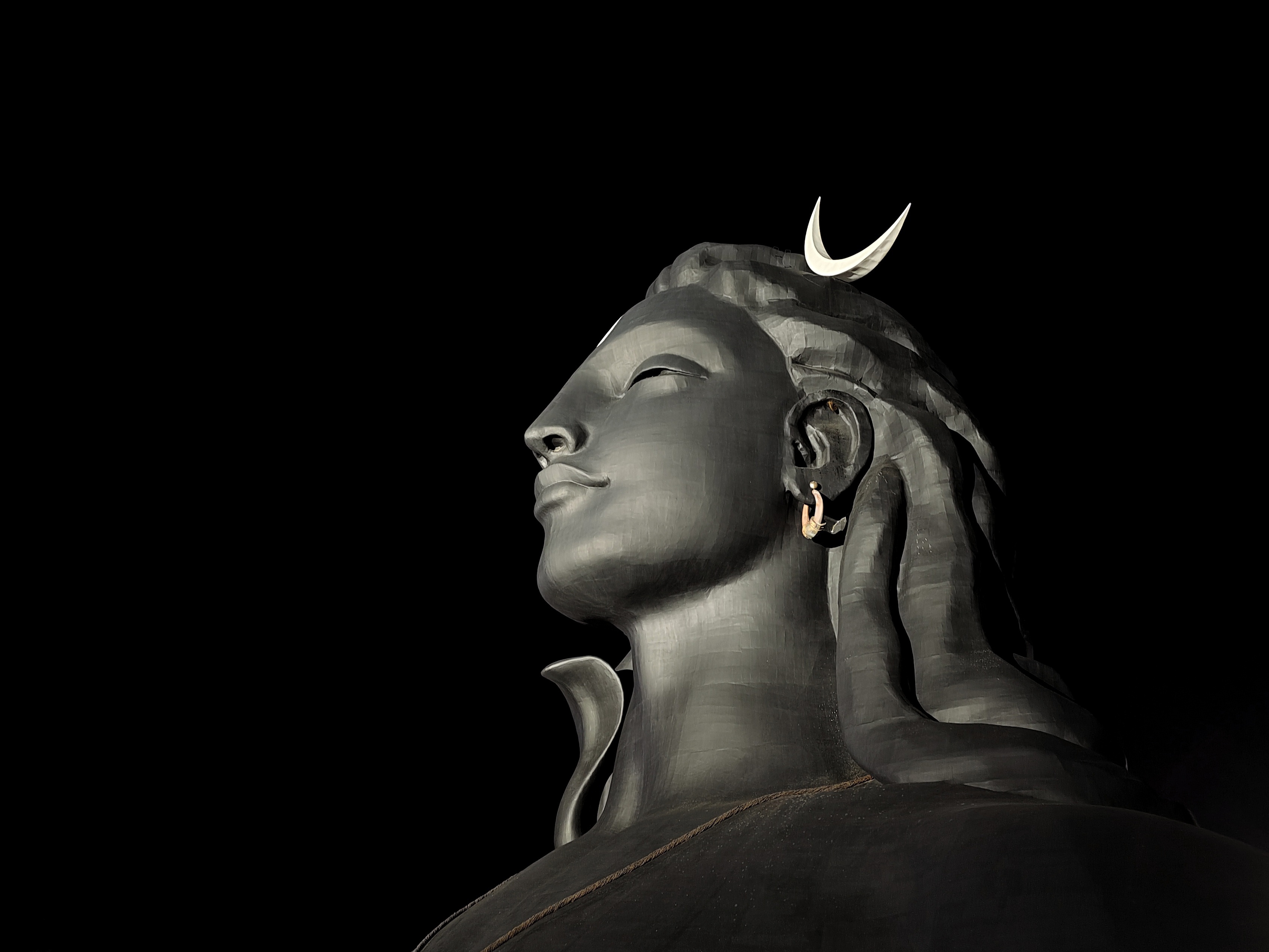
You have looked at the sculpture and images of Shiva countless times. But have you ever noticed his earring? Now that your inner ear can hear the subtle notes, his earring becomes visible. There were once Rishis who were musicians. They wished that Shiva listens to their music for twenty four hours a day. Shiva, in compassion, turned them into a ring and wore them in his ear, so their music could accompany him even as he carried out his work of dissolution. When your cry for the infinite grows sharper, it signals readiness for Upanishad jnanam. The ear has opened. The notes are heard. And in time, you too will become Shiva’s earring, a constant note in his infinite listening. He is already hearing you.

