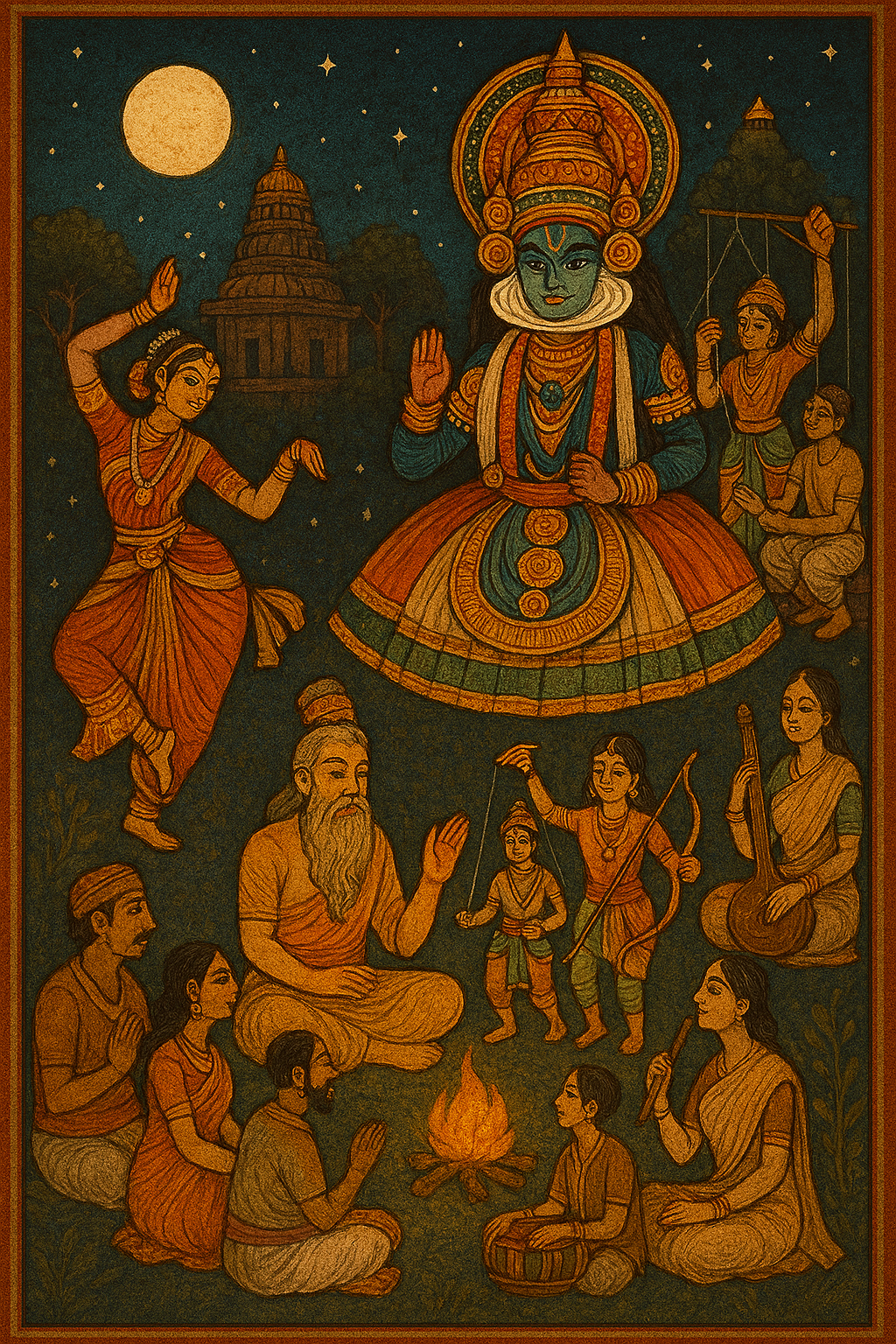
Night life today is associated with neon lights, crowded streets, music, bars, and weekend celebrations. But long before modern cities discovered the thrill of the night, our civilisation had already perfected a rich, meaningful, and deeply cultural night life. For centuries, the night belonged to stories, music, devotion, and the collective heartbeat of a community.
Not long before in India, nights were reserved for storytelling drawn from the Ramayana, Mahabharata, and the Puranas. These were not mere recitations—they were immersive performances. Folk music, dance forms like Yakshagana, Kathakali, Therukkoothu, and dramatic retellings of Itihasa and Purana were popular. Village festivals regularly hosted these performances, ensuring that culture flowed naturally from one generation to the next. A typical troupe had about a dozen artistes, invited and honoured by village elders. Through their art, people learned history, values, and dharma—effortlessly and joyfully.
These performances often began after 10 p.m. and continued till 5 a.m. The artistes were respected for their talent and treated with dignity. Even those who could not read or write knew Rama, Krishna, and the principles of dharma because culture was transmitted through experience, not textbooks. I too have witnessed some of these magical nights. I still remember an extraordinary performance at the Guruvayur temple—a Krishnanaattam program that began at 10 p.m. and continued into the early morning, narrating the valiant episodes of Krishna through the grandeur of Kathakali.
Puppet shows brought gods and goddesses to life. Bharatanatyam and classical music filled temple courtyards. Families finished dinner early and walked together to enjoy these performances. Mahashivaratri meant an entire night of jagaran. Dinner was served as seva. Special days were dedicated to all-night bhajans.
The Akhanda Bhajan at Ulsoor Subramanya Temple, started by my family over 70 years ago, continues even today—a living reminder of this tradition.
Through these night-long gatherings, devotion and bhakti became part of everyday life. Even an uneducated villager knew the stories of Rama and Krishna. Culture was not taught; it was lived.
Then the invasions happened. Invaders soon realised that this vibrant cultural ecosystem was impossible to destroy directly. A civilisation with thousands of gods, countless traditions, and innumerable teachers was like a thousand-headed serpent—where do you strike? They found their answer: break the night life. Strict curfews were imposed. After 8 p.m., people were forced indoors under threat of death. Temple arts like Bharatanatyam—performed by Devadasis as an offering to the deity—were labelled immoral. Even the Shodasha Upachara, the sixteen sacred offerings, were misunderstood and condemned. The aim was simple: sever the cultural roots.
Today, cities across India boast a different kind of night life—bars, discos, fashion shows, and weekend parties. Smoking is fashionable; for drug peddlers, night is business time. Koramangala and Indiranagar are well-known examples. Don’t ask me how I know. It is Paroksha Jnanam! Traditional drinks like panakam and buttermilk have been replaced by beer. Folk music and dance that once carried our epics have been replaced by new forms of entertainment.
Our traditional arts and the rich night life that once pulsed through our communities have been largely forgotten. Today, cinema and television serials have taken over the spaces where these older forms once thrived.
I write this with a smile, not with blame. Times change, societies evolve. But a question lingers gently: Have we drifted too far from the cultural night life that once nourished our civilisation?
 baladrishti